MQL vs. SQL: Marketing and Sales Qualified Leads Guide
Learn the differences between MQLs (marketing qualified leads) and SQLs (sales qualified leads). See why lead qualification is an important aspect to effective business growth.


All leads aren’t created equal.
Some leads are casually interested in your offerings. They’ve shown an interest, but they may—or may not—be open to learning more.
Other leads are actively interested and may even make a purchase sometime soon. They have taken specific actions that suggest they’re ready to move further down your sales funnel.
Because marketing and sales resources are limited, it’s hard to give every lead the same level of attention. You can maximize your outreach efforts by determining which leads are most valuable.
This process is called lead qualification. Since marketing and sales qualified leads behave differently, you can classify leads based on specific, measurable behaviors, like content downloads and product demo requests.
With cross-functional collaboration between marketing and sales, you can effectively measure, monitor, and optimize your quantity of MQLs and SQLs. Once teams understand exactly which behaviors and actions allow a lead to move from one phase to another, it’s much easier to build outreach strategies, track metrics, and analyze performance.
Key takeaways
- MQLs have demonstrated an interest in a brand, but SQLs have shown they’re actively interested in making a purchase.
- Some leads are more valuable than others. Use lead qualification to analyze behavior and determine whether a lead is an MQL or an SQL.
- Close collaboration between marketing and sales is the key to attracting the ideal balance of MQLs and SQLs.
- Don’t forget about tracking performance with an analytics tool to better understand how MQLs and SQLs impact your business.
What is an MQL?
Marketing qualified leads, or MQLs, are potential customers who have shown an interest in your products or services. When these prospects meet specific marketing criteria, like subscribing to your newsletter, they become an MQL.
Every business will have unique criteria for the actions that determine whether a lead is marketing qualified, including:
- Ebook downloads
- Template downloads
- Webinar registrations
- Newsletter subscriptions
- Contact form submissions
- Social media comments
- Personal referrals
These behaviors don’t necessarily indicate that the lead wants to buy, but they do suggest that the prospect may want to learn more.
You can build on this foundation and set the stage for further lead nurturing and evaluation. Eventually, once a lead has seen enough, they may take an action that moves them further along your marketing sales funnel.
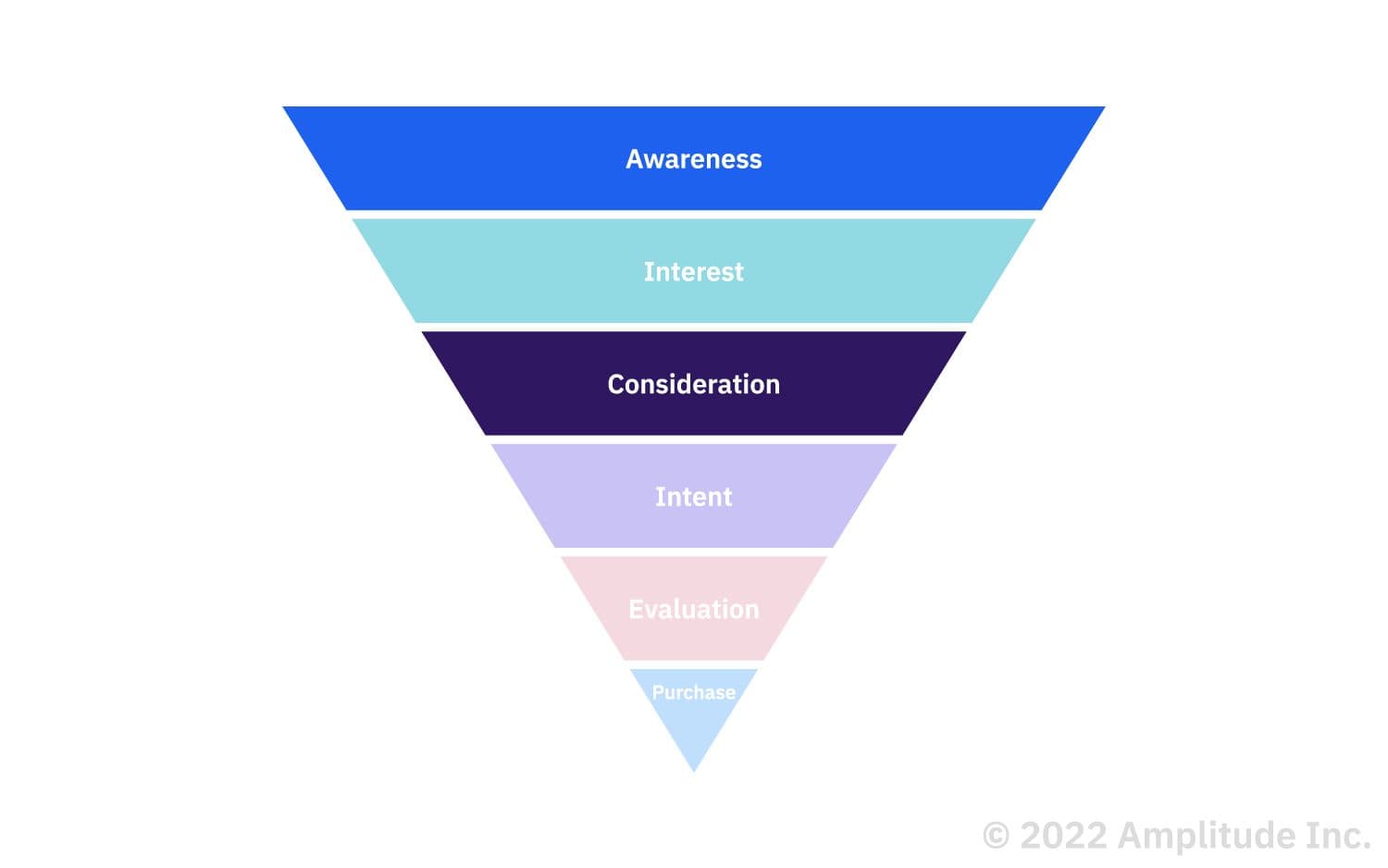
Marketing sales funnel stages
What is an SQL?
Sales qualified leads, or SQLs, are prospects who have shown interest in buying from your company. Every company will have different criteria that mean a lead is sales qualified. For example, when an MQL engages with more in-depth content like a product demo or a pricing page, they may officially become an SQL.
Often, when a lead becomes sales qualified, the sales team steps in to directly manage the relationship and move the prospect further down the funnel.
Similar to MQLs, there are several ways to define SQLs. Some examples of behaviors and events that warrant transitioning a lead from MQL to SQL are:
- Product demo requests
- Free trial or reverse trial signups
- Signups paired with high-intent behavior, like using a certain feature or completing a specific workflow within your product
- Repeated engagement with marketing and sales content
- Engagement with practical, high-intent content, like integration or implementation documentation
- Direct communication with the sales team to ask specific questions
To decide what an SQL looks like in your business, determine which behaviors signal the greatest intent to buy. Look at past data to identify trends and patterns.
For example, you can use funnel analysis to identify your conversion rate for free trial signups to paid subscriptions. If free trial users convert to paid customers at a high rate, it makes sense to count free trials as SQLs so that sales can further nurture the relationship.
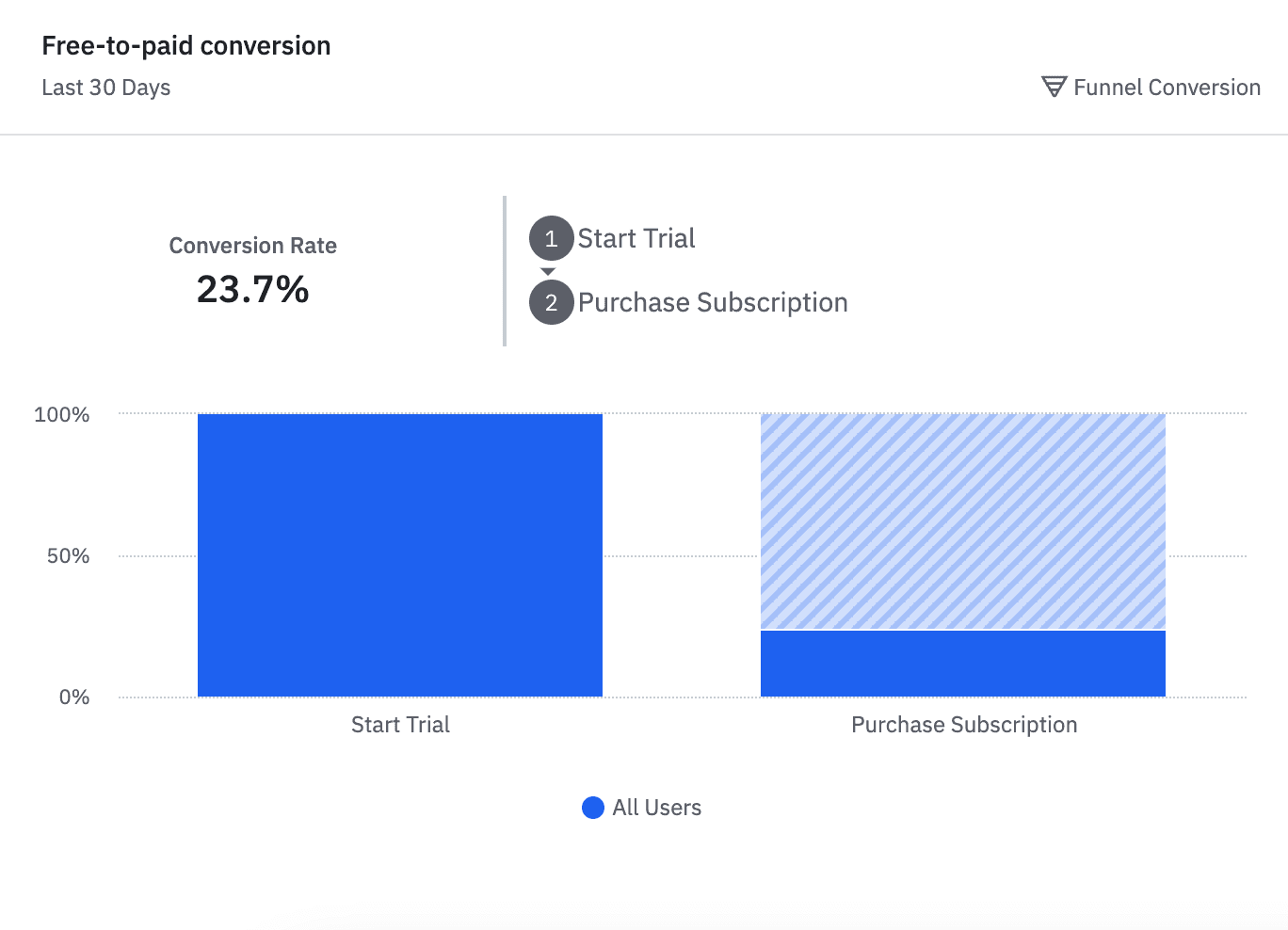
An example Amplitude Funnel Analysis chart showing a 23.7% conversation rate from starting a free trial to purchasing a paid subscription. Try this chart yourself in our self-service demo.
If your organization uses a product-led sales model, you can take lead qualification further by tracking user actions inside your product. For example, if a lead signs up for a free trial of your product and then explores more advanced or premium features, you can categorize them as a product-qualified lead (PQL).
To define PQLs, determine which key actions in your product trigger an aha moment for users. For example, you might consider free trial users who complete a specific workflow as product-qualified. Analyzing user behavior and product signals will help you identify which leads will most likely become high-value customers.
Learn more about leveraging your product to drive acquisition, retention, and monetization in our comprehensive guide on product-led growth: What is PLG?
MQL vs. SQL: How to correctly qualify leads
MQLs and SQLs impact your business differently. The qualification criteria are also different.
When qualifying an MQL, you assess the initial interest and engagement. A relatively straightforward action like downloading a resource or sharing an email address might be enough to qualify a lead for further marketing purposes.
SQL lead qualification is more complicated. You may need to track multi-step behaviors, like website journeys or product usage workflows, to determine whether a lead is interested in making a purchase.
If you treat every lead like an SQL, your sales team will quickly burn out. That’s why using a lead qualification process that balances MQLs and SQLs is so important.
How to attract a healthy balance of MQLs and SQLs
If you’ve decided that MQLs and SQLs are valuable metrics that will help grow your business, your outreach strategies should include a mix of messaging and channels that address both crowds.
When speaking to MQLs, focus on:
- Informative and educational messaging
- Addressing pain points
- Showcasing your brand's expertise
To appeal to SQLs, emphasize:
- The value and benefits of your product or service
- Any direct impact on specific needs
Ideally, your marketing campaigns will generate a high volume of qualified marketing leads. From there, you can lean into sales strategies to close the deal with fewer higher-intent prospects.
Successfully building a sales funnel takes collaboration between marketing and sales. Together, both teams can create a connected ecosystem that attracts, nurtures, and closes leads.
Learn how to use a digital analytics platform like Amplitude to properly track attribution for your various sales and marketing properties.
Attract more MQLs and convert them to SQLs
To attract more MQLs, provide valuable educational content to build trust and brand awareness.
Ebooks, white papers, and other downloadable resources that address your audience's biggest pain points are great mediums for educational content.
Sales can be a helpful resource for learning more about prospects' challenges. Encourage the sales team to share common pain points that surfaced from customer calls with marketing. Marketing can use that information to create compelling content that speaks to specific pain points and encourages leads to keep engaging with your content.
Keep in mind that before someone becomes an SQL, they need to know exactly how your brand can make their lives easier. Product demos and trials are two ways to attract and qualify sales-ready leads. SQLs might also appreciate detailed information about features, packages, and pricing.
Marketing can include links to product demos and free trial signups in content to drive conversions. They can also help sales write sell sheets, presentations, and other sales-enablement materials. Enlisting marketing’s help will ensure that all resources stay on brand and use consistent messaging.
They may even be able to use sales materials as inspiration for additional marketing content designed to attract more MQLs who are likely to become SQLs, and the cycle will continue.
You won’t be able to move every MQL down your sales funnel. But you can use customer journey analytics (CJA) to analyze behaviors and determine where leads convert and drop off. With Amplitude’s Journeyts chart, you can:
- View step-by-step breakdowns of the paths taken by converted and dropped-off users.
- Find potential friction points in your marketing and sales strategies.
- Discover which paths are most likely to lead to conversion.
- Identify exactly where your users drop off if they don’t convert.
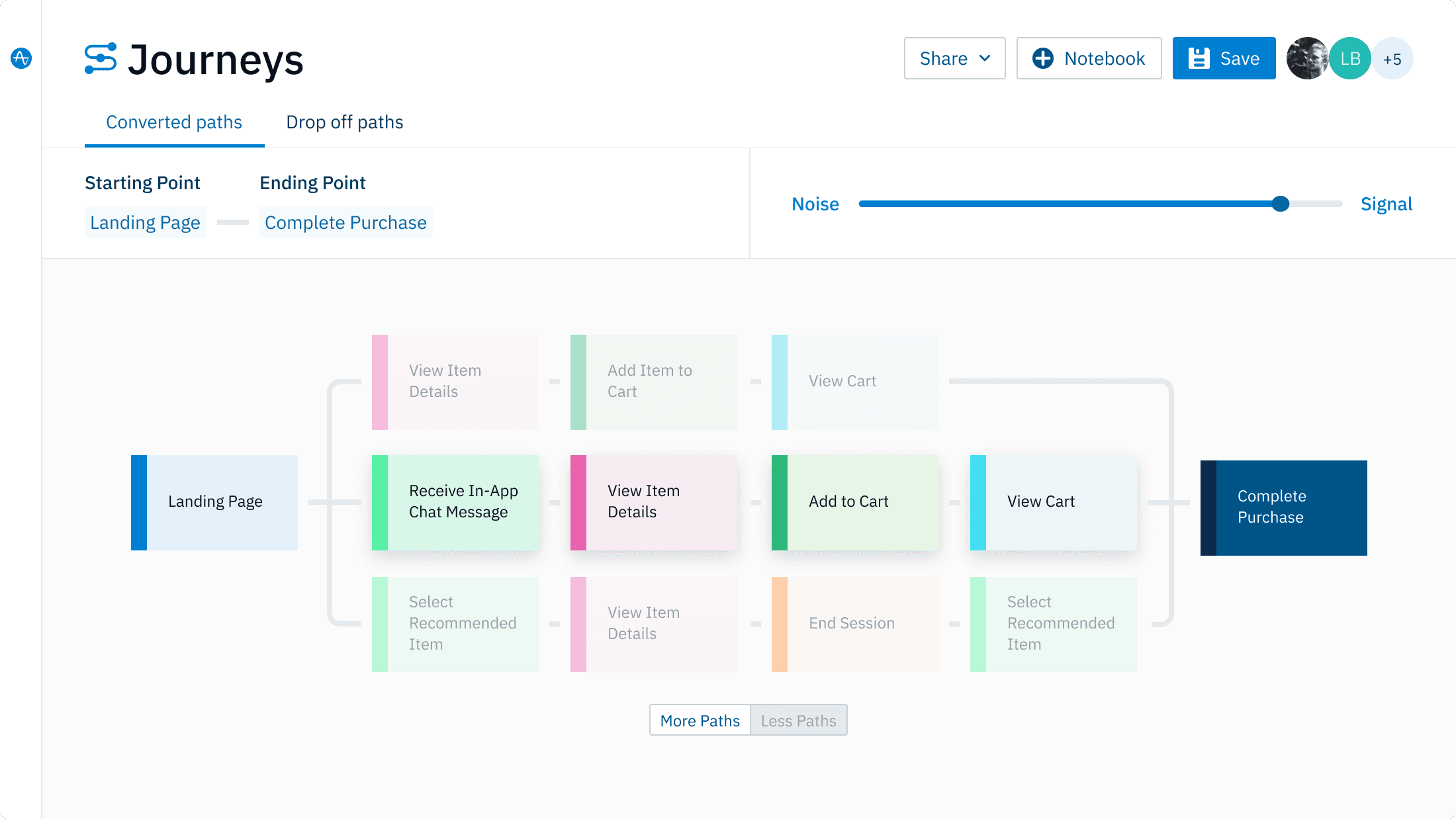
An example of Amplitude’s Journeys showing the paths users take before completing a purchase. Try this chart yourself in our self-service demo.
Tracking and analyzing MQLs and SQLs
It’s not enough to know the difference between MQLs and SQLs. To drive revenue and grow your business, you also need to analyze the performance of your outreach campaigns.
Since MQLs (ideally) convert to SQLs as they learn more about your company, use a digital analytics tool to analyze your acquisition channels with multi-touch attribution.
You’ll learn which channels are most likely to attract MQLs and quickly identify any underperforming channels. From there, you can fine-tune your campaigns and tactics, prioritizing and deprioritizing channels based on your data.
Experimentation is another essential tool that you can use to optimize your acquisition channels and increase your MQL volume. A/B test different messaging, visuals, or campaign landing pages to discover what brings higher-quantity (and quality) leads.
Embracing digital analytics will help you refine your lead generation efforts, enhance channel effectiveness, and ultimately increase MQLs.
Convert more MQLs into SQLs with Amplitude
MQLs and SQLs are quantifiable and trackable metrics, so it’s easy to monitor them with an analytics platform like Amplitude.
Amplitude simplifies how you track and analyze data, so you can focus on converting more customers. You can analyze any mix of metrics, channels, and customer behaviors to get a detailed, actionable understanding of the actions that contribute to the growth of your business. Use those insights to refine your marketing campaigns and earn more customers.
Sign up for free today and start making strategic, data-driven decisions.

Noorisingh Saini
Global Content Marketing Manager, Amplitude
Noorisingh Saini is a data-driven marketer managing global content marketing at Amplitude. Previously, she managed all customer identity content at Okta. Noorisingh graduated from Yale University with a degree in Cognitive Science.
More from Noorisingh


