How to Use Predictive Customer Analytics to Convert Users
Know what your customers will do before they do it with predictive customer analytics. Use it to refine product pricing, inform marketing campaigns, decrease churn, and increase lifetime value.

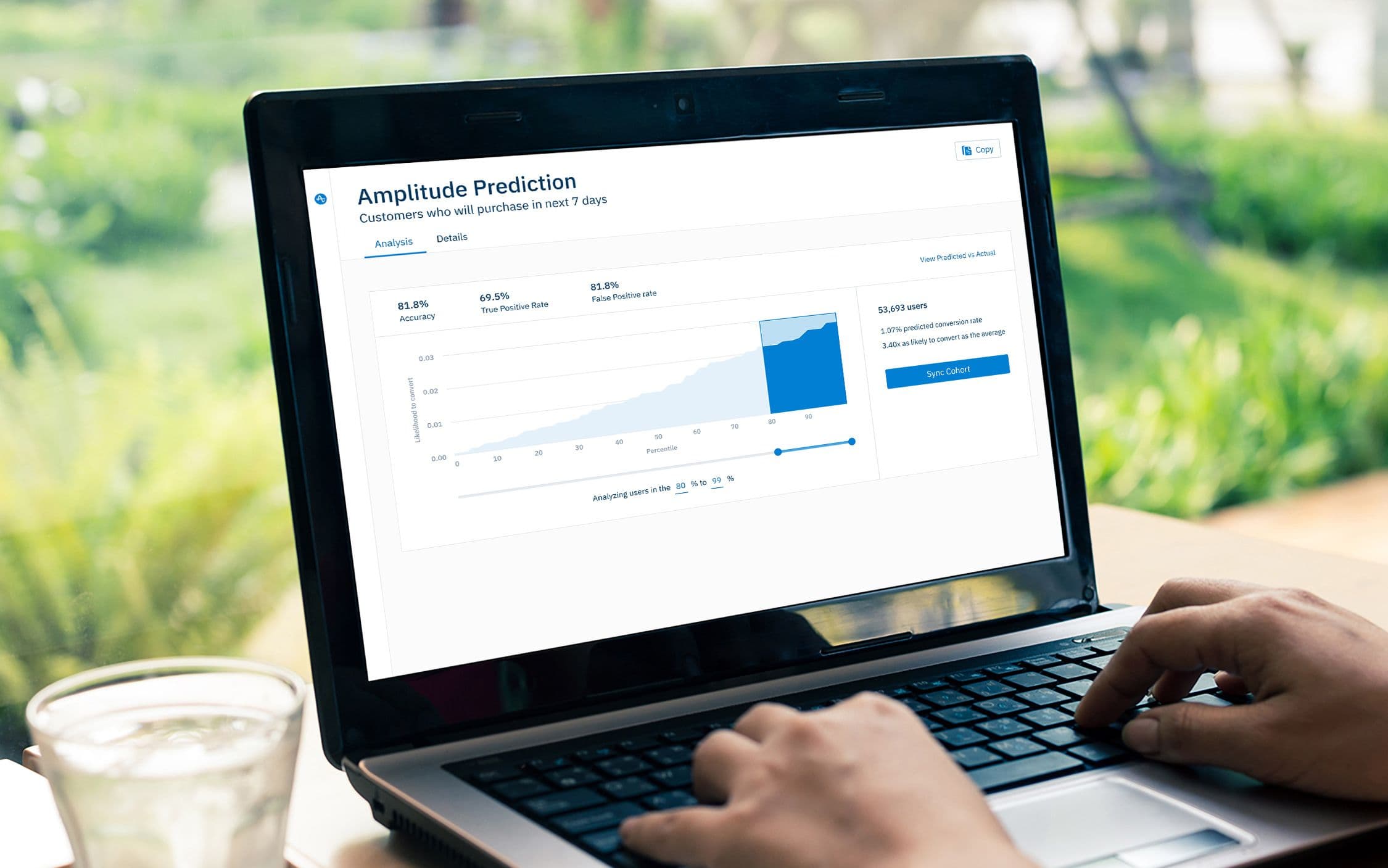
Predictive customer analytics uses machine learning to analyze historical data and build an algorithm. That algorithm is then applied to current data to predict what will happen next.
While these predictions can’t foretell the future with 100 percent accuracy, they can reveal trends and patterns that offer you data-backed clues about the best way to accomplish your goals, including conversions.
You can use predictive analytics to understand the behavior of customers and increase conversions. Read on to learn how.
Key takeaways
- Predictive customer analytics isn’t 100 percent accurate, but it’s a fast, effective tool for crunching massive amounts of data to identify hidden trends and patterns in a customer’s actions. These customer insights help ensure your decision-making is driven by data, not guesswork.
- You can make business decisions about marketing channels, pricing models, and upsell opportunities based on what your predictive analytics algorithm learns about your customers and their behavior.
- Use predictive analytics to anticipate the signs of a customer who is about to churn and intervene with the right message delivered at the right time.
- Customer predictive analytics is gaining traction among large and small companies across industries. You’ll need to adapt to this changing landscape to maintain a competitive advantage.
How accurate is predictive customer analytics?
Predictive customer analytics isn’t foolproof. The algorithms that produce customer analytics rely on a large amount of high-quality data to spit out reliable predictions.
Companies with more than 100,000 monthly active users are more likely to enjoy the full benefits of predictive customer analytics because they have a large enough volume of data to ensure accurate predictions. Companies must also plot out customer interactions for users to trigger throughout their customer journey. These triggers can be touchpoints like clicks, signups, video views, or reaching certain milestones. This is the behavioral data your predictive analytics algorithm will crunch.
A predictive analytics tool like Amplitude Audiences will measure the accuracy of the model and give you a Health Score based on things like data quality and quantity. Anything above 70% is considered a usable model.
It’s helpful to think of predictive customer analytics in terms of trends and playing the odds rather than precise figures and percentages. For example, say predictive analytics shows that 45 percent of your customers who haven’t played a song in your music-streaming app after two days will churn. However, that figure jumps to 65 percent after three days of inactivity.
Rather than worry about the precision of the percentages between days two and three, focus on the overarching trend. This insight tells you there’s an important milestone where it’s essential to re-engage customers to ensure you meet their needs. For example, you could send an in-app notification inviting them to listen to a new single released by their favorite artist.
The relationship between predictive analytics and customer behavior
Predictive customer analytics helps you understand user behavior and how customers will react to your attempts to nudge them to take specific actions. A predictive analytics tool helps you test different possibilities, so you can make a cost-effective decision with a higher probability of success.
With a predictive analytics algorithm like Amplitude’s Predictions, you can simply select the predictions tab, build a cohort or group of users, and choose the future action you want—or don’t want—that group to take. Once the model has finished running, you’ll be able to see which factors are the most important in predicting conversion. These factors include attributes—age, device type, company size—and behaviors—playing a song, sharing a playlist, using the favorite feature.
Knowing what features and in-product behaviors affect conversion helps you understand what to tweak to improve conversion rates.
Use cases for predictive customer analytics
You can use customer predictive analytics for:
- Pricing: Predictive analytics helps you decide the right price for your product. You might experiment with a few different prices. If you discover some people are abandoning their shopping carts at a higher price, you could opt to send a follow-up email with a discount offer.
- Cross-sell and upsell: Increasing customer lifetime value (CLV) through cross-selling and upselling is easier with predictive customer analytics. Based on historical data, the algorithm may alert you that gamers who buy gems in-game to level up also like to buy new items. You may use this opportunity to create a bundle for in-game power-ups when customers purchase a certain number of gems.
- Marketing campaigns: With predictive customer analytics, you might see that people who arrive on a landing page from TikTok are more likely to download your app than those who click through from Facebook. You might take that information and decide to invest more of your social media budget on TikTok. Or, you could tweak the messaging on the Facebook ad to deliver more qualified and interested visitors.
- Inverse pricing: Predictive customer analytics helps you target the right message to the right customer based on their likelihood to perform an action. Take subscriptions, for example. The algorithm can help determine whether users have a high, medium, or low likelihood of signing up for a monthly subscription. You can use that information to place users into three cohorts and tailor your follow-up accordingly. For example, a simple email reminder or in-app notification may be enough for those likeliest to sign up. For those with a low likelihood, you may consider giving them their first month free and gifting a ten percent discount on their second month.
Inverse pricing for a streaming service. Users with a low likelihood of upgrading after their free trial are offered a larger incentive than those with a high likelihood of upgrading.
Reducing customer churn with predictive analytics
It doesn’t matter how good your acquisition engine is; if you can’t retain existing customers, it’s hard to grow your business.
Predictive customer analytics helps businesses identify customers at high risk of churning. To identify customer attrition before it happens, look at the traits of customers who have churned in the past using churn rate cohort analysis. You can also look at a customer’s lifecycle for clues about who will likely churn. You might find indicators based on how long the person was a customer, how long it was since they last interacted with your product before churning, and what features they did—or didn’t—use before they said goodbye.
Then you can test different messaging and incentives to learn what’s most likely to retain those customers in the future.
Finally, you apply those lessons to current customers who show similar signs of churning. By intervening early, you have a better chance of regaining trust and customer loyalty.
Four companies using predictive analytics (the right way)
The predictive analytics market is expected to grow to $41.5 billion by 2028. Companies that don’t start using these forecasting tools now risk falling behind the competition. Here are a few use cases demonstrating how industry leaders use predictive customer analytics to grow their businesses.
- Jumbo has turned its business into a lucrative upselling and cross-selling machine with the help of Audiences. Amplitude’s algorithm learns from past purchasing behavior and identifies what products customers want to buy next. The more data they include for product predictions, the more sales they make when customers go to check out.
- Amazon uses its massive datasets to maximize the value of every purchase customers make. It changes the price of products as frequently as every ten minutes. Customers see different prices based on what competitors are selling their products for, the inventory available, how popular the item is, and past behavior from the customer and people with similar preferences.
- Stitch Fix uses predictive analytics to match styles to customers. They use a blend of explicit information provided by the customer, plus the behaviors of similar cohorts of customers and how they reacted to those styles.
- Chick-fil-A makes it easy to quickly select your favorite item because it presents different menu layouts. They base each layout on known customer preferences and the preferences of similar customers. Predictive analytics also helps Chick-fil-A make UX decisions in their app, like moving the delivery button to the first ordering screen. That move led to a 23 percent increase in delivery orders.
Put predictive customer analytics into practice
A 2019 Harvard Business Review survey showed that 77% of executives thought implementing big data was a chore. But it’s not the technology they were wary of—93% thought adapting their people and processes would be the real obstacle.
While the math underlying predictive customer analytics may be complex, the process for creating a prediction doesn’t have to be. Digital analytics tools like Amplitude are self-service and put data science in the hands of product managers and marketers who need it for daily decision-making—without involving your data science team. Turn more people at your company into data analysts who can create predictions about customer behavior—quickly and on their own—and take data-driven action.
Request a demo of Amplitude Audiences today and learn how easy it can be to make predictions that inform your pricing, product personalizations, marketing campaigns, and more.
References
- Global Predictive Analytics Market 2028, Statista
- How Amazon Used Big Data to Rule E-Commerce, Inside Big Data, 2019
- Algorithms Tour, Stitch Fix
- Companies are failing in their efforts to become data-driven, Harvard Business Review, 2019

Jeremy Benza
Former Principal Solutions Consultant, Amplitude
Jeremy Benza is a former Principal Solution Consultant at Amplitude, where he helps teams uncover behavioral drivers of engagement, conversion, and retention in order to build better products. Jeremy has worked in the Analytics space for more than 10 years and he’s an alumnus of Salesforce, Qlik, and JPMC.
More from Jeremy


