How behavioral cohorts unlock the customer lifecycle
Curated behavioral cohorts are designed to make the three critical stages of the customer lifecycle—acquire, engage, retain—more efficient by identifying and attracting high-value customers.

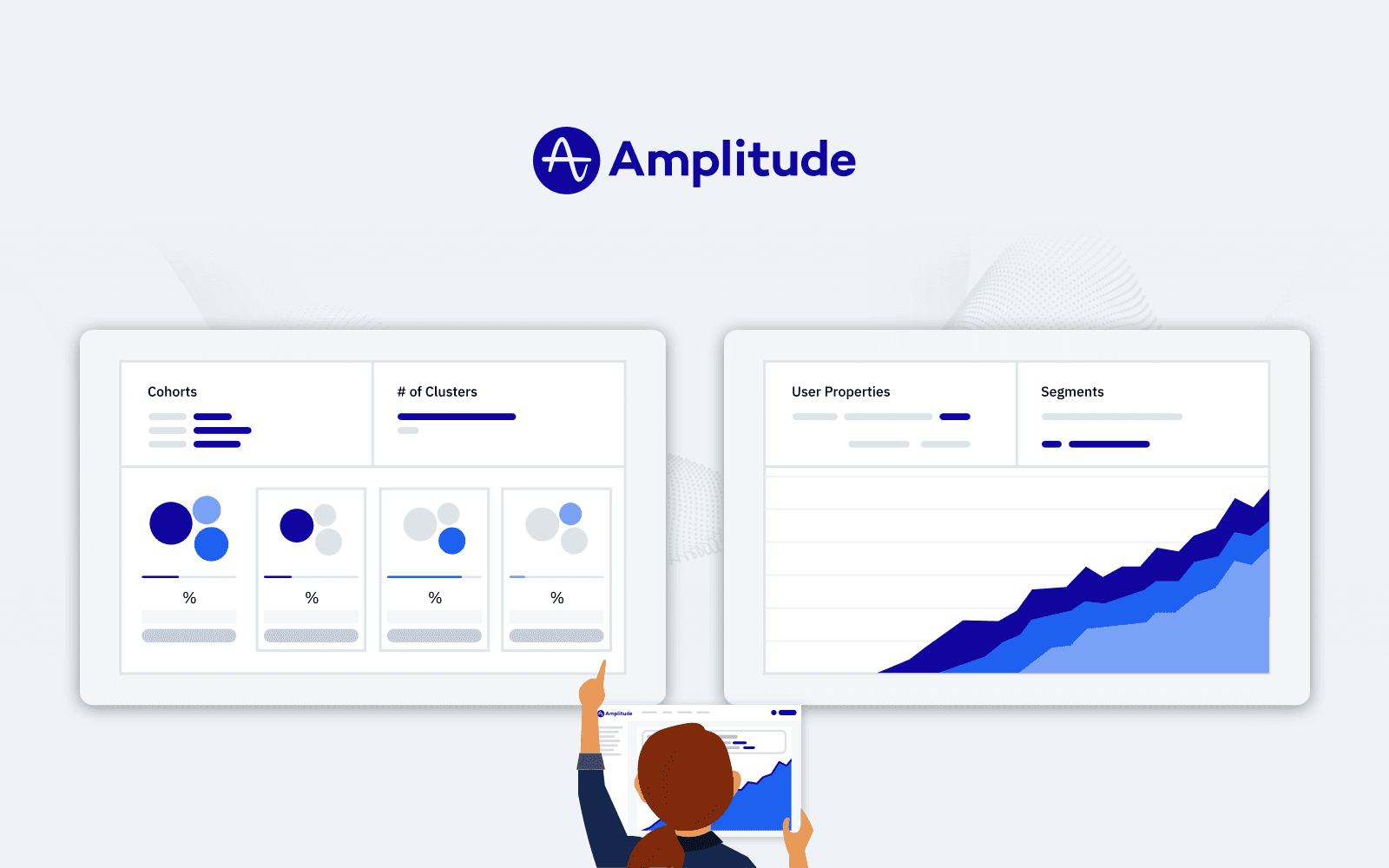
If all users of your audience were exactly alike, your customer lifecycle and tech stack would be simple:
You’d only need one marketing channel to find your users.
You’d only need to build one set of features to solve their problems.
You’d only provide one level of support to keep them satisfied.
Sadly, this isn’t the case—so your users will invariably find and engage with your product for a variety of reasons, and from a variety of different sources.
The truth is that your users’ needs, wants and propensity to spend time or money will change over time—and by extension, so should your product and customer engagement strategy.
By creating behavioral cohorts within Amplitude, you can account and plan for these behavioral variations. In doing so, you’ll be able to unlock other hidden user personas that you hadn’t accounted for previously. By defining and analyzing the different segments of your customer base, you can learn and understand what motivates them during different parts of their lifecycle.
In leveraging your existing behavioral data, you can also design meaningful experiences within your product, deliver personalized messages to your users, and run well-informed experiments to improve how you acquire, engage, and retain your users.
What is the Customer Lifecycle?
The customer lifecycle is the path your users follow before, during, and after engaging with your product, website, application or support system. This lifecycle—much like the data management lifecycle—begins well before users sign up, and the cycle continues well after they’ve put their wallet and attention away.
The major milestones of a customer lifecycle include acquisition, engagement, and retention. Within these three stages, there are incremental steps: awareness, conversion, purchase, activation, renewal, and referral.
Acquisition is the first stage of the customer lifecycle. This is where your potential customers discover and learn about your product:
- At the awareness step, potential customers realize they have a problem, a need, or a want that needs to be addressed—and they will begin to seek solutions.
- Conversion is where potential customers differentiate your solutions from your competitors’—and this is where you can influence their decision. Ultimately, the goal is to ensure they decide that yours is the one that best meets their needs.
Engagement is the stage when the potential user becomes an official and authenticated customer. They commit to your solution—by signing up, registering, adding items to a cart/list, or actually making a purchase:
- The purchase step includes the product selection and the overall conversion process. If your product marketing strategy and cohort engagement is successful, you’ll officially acquire this customer.
- At the activation stage, your users are experiencing your solution for the first time—and this impression is critical to longer-term engagement. Within SaaS (especially B2B, B2C, and e-commerce companies), the onboarding process is usually unwieldy, and churn is always a potential risk. This risk is why it is absolutely crucial to ensure your newest users find immediate value in your product.
Retention is the stage where your customers clearly indicate satisfaction. They do so by showing that they value your platform (via dollars spent, time spent, duration and depth of engagement). Retention is also the biggest window of opportunity in which you can increase customer lifetime value. To build strong brand loyalty, word-of-mouth and create engaging case studies, you’ll need customers who appreciate your product enough to use it again and again:
- Renewal: this is where your users commit to your platform again, either by renewing their terms of business, purchasing additional products, or upgrading their subscription altogether.
- Referral: this occurs when your users are promoting your product to their friends and coworkers, or when they actively participating in a referral program. Customers who make it to the referral step are the ones you certainly want to leverage and retain, as they are an extension of your reach without any additional spend required.
Users can and will naturally fall off the customer lifecycle between and within any of these stages. By leveraging behavioral cohorts in product analytics tools like Amplitude, product-driven teams can identify and leverage their existing messaging, channels, and experiences that encourage customers to move through the cycle.
Stage 1: Acquire High-Value Users
At the awareness step, you are essentially educating your potential audience and identifying the right channels to attract the right personas. Reaching the right users with the right message at the right time—before you even know who they are—can be tricky.
Note: This is where Amplitude’s predictive cohorts come in handy. Instead of building cohorts based on what users have done in the past or have not done yet, predictive cohorts let you segment your users based on their likelihood to perform a specific action in the future. It’s most useful in three types of workflow improvement: communication frequency, dynamic pricing, and content personalization.
For example: Creating customized cohorts of current customers who took acritical action—such as making a repeat purchase or upgrading their subscription—is a powerful way to identify valuable leads. Look for similarities in how your new users or current customers found your platform: Was it from a specific marketing campaign, an effective split-test, specific keyword search, or a social media advertisement? With cohorts, you unlock the ability to isolate and target these potential customers based on existing power users who have similar pain points and shared traits.
Within conversion, differentiating your product from your competitors is key. To drive higher conversion, ideally you’re able to find the most optimal and efficient messaging with the same cohort of high-value customers.
For example: When using Amplitude’s Engagement Matrix chart, you can easily see which features your users engage with most frequently (and which ones they don’t engage with at all). This analysis will help you make informed decisions on which features to refine or deprecate entirely.
You can also retroactively understand and broadcast the impact of these decisions within your teams. Easily communicate just exactly how these data-informed feature changes eradicate conversion barriers or improve overall conversion altogether (see also: Conversion Over Time Analysis, Amplitude Releases and Amplitude Notebooks).
For the product management team atChange.org, they rely on Amplitude’s behavioral cohorts on a daily basis to evaluate their acquisition strategy and refine as the landscape of obtaining users fluctuates. To understand their complex user behavior, PMs will define cohorts to help answer questions such as, “Out of the people who have signed a petition in the last 90 days, how many have returned and signed up to donate?”
From there, product-driven teams can thenuse that information to determine which marketing campaigns are converting petition signers into donors, and also use Conversion Drivers to understand if specific campaigns are more indicative of conversion than others.
Stage 2: Engage Users with Personalization
The work is just beginning at the purchase step. Making sure your product provides users value early on and often is the golden ticket to encouraging new users to progress through the customer lifecycle.
At the activation step, it’s essential to constantly improve the onboarding process. Many teams using Amplitude navigate this constant evolution by creating behavioral cohorts based on positive and negative experiences. For example:
- Users who add items to cart, but don’t complete their purchase
- Users who cancelled their subscription within a specific time frame but returned at a later point to view content
- Users who have made multiple purchases via guest checkout, but have not created an account
By identifying where users are struggling and dropping off, you can confidently adjust your product’s workflow to be more intuitive and contain fewer friction points.
The activation step is also an ideal time to make sure your new customers know about the features that they will find most valuable. We suggest creating a behavioral cohort of users who have taken a specific critical action, and determine which features that group uses most. Nudge new customers to build habits around the features you want to drive them towards.
For example, you can enable personalized “Welcome Back!” push notifications for users who have downloaded your application on multiple devices instead of forcing them through the onboarding funnel again.
Suffice to say, the first few experiences that your users have with your product are crucial during the engagement stage. Recognizing this, the product team at Intuit’sQuickBooks decided to look at their new user experience to see if they could increase overall activations over time. They created incredibly specific behavioral cohorts to observe their best-performing power users, and quickly identified the actions these customers completed in the first 45 days on the platform.
Armed with this information, the Quickbooks team outlined critical milestones in the new user experience and refined their new user experience by adding prompts to help their new customers evolve into power users. By removing barriers within their onboarding experience and encouraging new users to mimic the behaviors of power users, the Quickbooks team achieved a10% increase in activations.
Stage 3: Retain Users with the Right Features
Loyal customers are the apex of the customer lifecycle—they sign up, and continue to engage on your flagship product while using newly released features. If they are impressed or moved by a particular experience you’ve created, they will invariably share their enthusiasm for your brand with everyone they know.
With behavioral cohorts, you canbuild this loyalty and help your users get to the renewal step by understanding where they tend to disengage. For example, by creating a cohort of users who don’t renew, we could identify where these users encountered hurdles or when they started to lose interest. Ensure that they don’t continue to fall into this pit of churn by adding in-platform messaging to guide at-risk users through common trouble areas. You can also take a proactive approach before users even officially disengage by prompting them to try new features they may not know about (because they haven’t used them yet) to rekindle their interest.
The referral step sustains the customer lifecycle motion by attracting new users. Start by creating a cohort of users who have made a referral and look for common actions that might signal that a user is primed to make a referral. A couple of examples to consider:
- Users who have renewed at least twice in the last year
- Users have logged in daily for a week consecutively
- Users who have spent a significant amount of time in your product within their first 7 days
Invite these users who fall into these cohorts to join your referral program, or prompt them to write a review. By understanding which features are most valuable to your power users, you can help foster loyalty across your entire user base.
Recalling the previous real-life example, the QuickBooks team noticed that one of their KPIs was lagging—it was highly critical to increase the number of QuickBooks users who received on-time payments from their customers.
By using behavioral cohorts in Amplitude, the QuickBooks team learned that detracting issues arose when both users and their clients had Gmail domains. Because their users with Gmail domains were a key cohort for Intuit, their product team created a personalized invoice solution specifically for Gmail users to eliminate a very pointed pain.
Their well-informed solutionincreased on-time payment for this segment by 200%, removing a hurdle for their power users, broadening the number of power users as a result, and overall increasing the likelihood that they would renew.
Re-visit Your Customer Lifecycle Regularly
Your product strategy (and therefore, your customer lifecycle) should be constantly evolving as the priorities and preferences of your users evolve over time. To make sure you keep your users progressing through your key workflows, it’s critical to consistently review your target behavioral cohorts at each stage of your customer lifecycle.
At the activation stage, be sure to check for shifts in how your power users are finding your product.
At the engagement stage, ensure that your messaging keeps pace with new features and thoughtful guides your users towards your North Star metric.
At the retention stage, be on the look-out for changes in your users’ interest over time to avoid the dreaded leaky-bucket phenomenon.
By reviewing your behavioral cohorts regularly, you’ll be setting your team up for a successful and tailored customer lifecycle—and you’ll continue to acquire, engage, and retain high-value customers.
Ready to see how product analytics can make your customer lifecycle more efficient? Learn more by attending a hands-on Amplitude workshop.

Sam Edwards
Former Global Technology Partner Manager, Amplitude
Sam is a global technology partner manager at Amplitude and former solutions engineer and customer success manager. She specializes in helping businesses reach their revenue goals, scale for growth, and build the best product for their users.
More from SamRecommended Reading

Your agent isn’t broken. It’s guessing.
Sep 23, 2026
6 min read

Bring headless Amplitude where you work
Sep 16, 2026
3 min read

Should I install the Amplitude SDK?
Sep 15, 2026
4 min read

Amplitude climbs to #3 in G2 Digital Analytics Momentum
Sep 15, 2026
10 min read
Explore Related Content
9 Top Feature Flag Solutions for Modern Product Teams in 2026
Jan 27, 2026
Using behavioral analytics for growth with the Amplitude app on HubSpot
Jun 17, 2024
10 min read
Identity resolution: The secret to a 360-degree customer view
Feb 16, 2024
10 min read
Inside warehouse-native Amplitude: A technical deep dive
Jun 27, 2023
15 min read
5 Proven Strategies to Boost Customer Engagement
Jul 12, 2023
Designing High-Impact Experiments
May 13, 2024
9 direct-to-consumer marketing tactics to accelerate ecommerce growth
Feb 20, 2024
10 min read
Leveraging analytics to achieve product-market fit
Jul 20, 2023
10 min read