How to Achieve Profitable Growth through Your Pricing Strategy
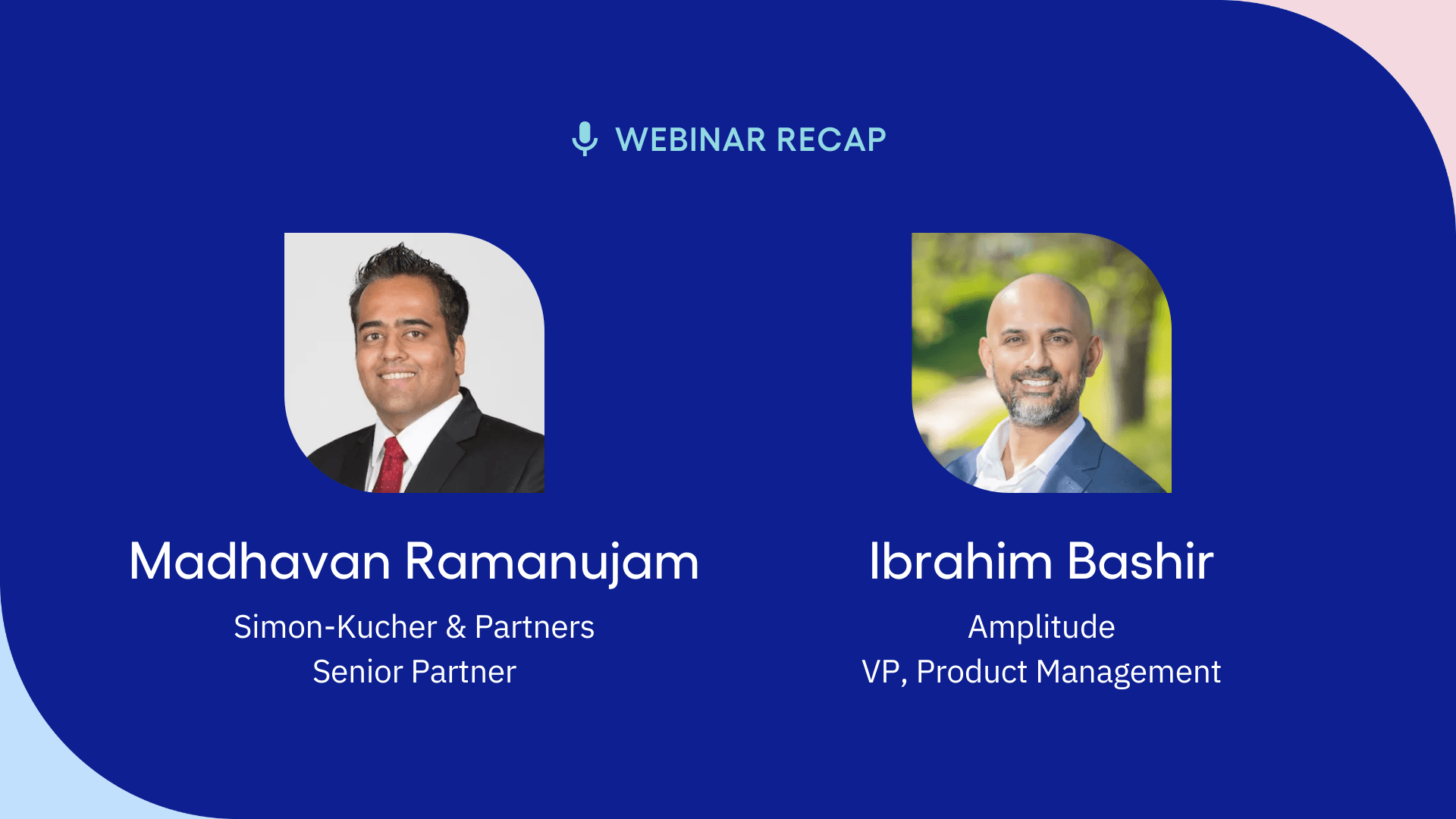
In our latest fireside chat, we speak with Madhavan Ramanujam about how companies can master monetization.

Remember the MiniDisc? In the early 1990s, Sony introduced a new way of listening to music that was meant to combine the superior sound quality of compact discs and the convenience of cassette tapes. It boasted features like skip-free playback on the move and the ability to record digitally. On paper, it seemed like a slam dunk—the next big thing in portable audio. So why did the MiniDisc ultimately fail?
A big part of it was pricing. The $750 price tag alienated teenagers (Sony’s target audience), who held onto their cassettes and CDs until the MP3 revolution a few years later.
Innovation is crucial for success, but without a solid pricing strategy, your hard work is destined to fail.
That is one of the major takeaways from my conversation with Madhavan Ramanujam, senior partner at Simon-Kucher & Partners and co-author of the book Monetizing Innovation. The discussion, which was the latest event in our Fireside Chat series, focused on the importance of monetization and pricing, including why many companies struggle with those areas.
Read on for more of Madhavan’s thoughts on how to use monetization and pricing strategy to grow.
Don’t rely on guesswork for your pricing
Many B2B and SaaS companies struggle with pricing because they rely on guesswork instead of data, Madhavan observes. When speaking to companies, he notices that many “haven't done the work to understand what their customers truly need and what they're willing to pay for.” This lack of clarity also trickles down to the sales team.
A big issue here is the inability to communicate value effectively. How can your sales reps feel confident that the pricing reflects the true value proposition for the customer? Without having done the groundwork, pricing becomes a “wild west” scenario. Your sales team automatically falls back on offering discounts freely and spending a lot of time on negotiations.
Madhavan suggests “productizing the pricing process.” This involves providing the sales team with data-driven insights on “the right start price and the target price” of the product. Set clear guidelines and tie incentives to hitting target prices to empower your sales force and avoid unnecessary discounting.
Get an early start on your pricing strategy
Madhavan emphasizes the importance of establishing a pricing strategy early on—as early as the research and development phase. Aim for a “product-market-pricing fit” as opposed to just a “product-market fit.” Just because someone likes your product, it doesn't mean they’ll pay your asking price.
“If someone asks me, ‘Do you like these headphones?’ I might say yes,” Madhavan says. “That means there’s a product-market fit. But if you then ask me to pay $500 for them, the whole conversation changes.”
Testing pricing and willingness to pay early is crucial. Madhavan suggests replicating sales and marketing conversations, presenting the product and value proposition, then asking a simple question: “Would you pay for this?” If you get a negative response, ask why. The answers will offer valuable data to help you refine your product and pricing strategy.
Working on your pricing strategy early reduces the need for drastic overhauls later on. Companies that rely on guesswork may still achieve some success but are likely “leaving money on the table” without a systematic pricing strategy, Madhavan notes. He calls this “growing but not growing profitably.”
If you don’t take a proactive approach to pricing strategy, you will likely wind up overhauling one or more of the following at Series B or C funding stages:
- Packaging strategy: Figure out the best way to go to market or find the right platform strategy. Should you offer a platform with add-ons, tiered pricing options (good, better, best), or use-case-based packages?
- Pricing model: How you charge is often more important than the price itself. The best model emphasizes the value your product delivers and enables you to measure, meter, and charge based on that value.
- Pricing levels: Determine what level to charge your prices in a way that avoids a “minivation” or under-monetization.
Secure internal buy-in across all departments
Pricing and monetization is a cross-functional endeavor. “You can’t talk pricing in isolation of product,” Madhavan says, noting that an effective pricing strategy involves collaboration between all departments, from product, marketing, finance, sales, customer success, and the pricing team itself. Everyone plays a role in crafting the pricing message and model, he points out.
To achieve this internal buy-in, Madhavan suggests a few key strategies:
- Cross-functional core team: Establish a team with representatives from all relevant departments. This team meets weekly to refine the pricing blueprint based on market feedback. This ensures that everyone has a stake in the process and that their concerns are addressed.
- Weekly meetings with implementation teams: Don't wait until the end of the project to involve those who will implement the new strategy. Regular check-ins throughout the process keep everyone informed and invested in the success of the changes.
- Prioritize the sales team’s buy-in: Ultimately, the sales team has the crucial role of communicating the pricing strategy directly to the customers. If the sales team doesn’t understand and believe in the new approach, how are they going to convince your customers? Involve them from the beginning and equip them with the knowledge and data they need to confidently negotiate prices based on the new strategy.
Ensure your product team owns pricing
Madhavan’s views on pricing ownership have changed over the past few years. In the past, he explains, he would have argued that the finance team was the owner due to its ability to provide a “healthy friction” and a natural “checks and balances” in what you’re building.
He now believes that the product team is best positioned to take ownership of your pricing strategy. He points out there is a better value alignment this way. The product team is in charge of building the thing that, ultimately, needs to be valuable to your customers. Effective pricing reflects this value, ensuring customers see the connection between what they receive and the price they pay.
Housing pricing within your product team also enables you to take a proactive approach to pricing: Companies can design products with customers’ willingness to pay in mind rather than attaching a price tag after development.
Communicate value, not features
Madhavan believes that companies tend to overemphasize features and underplay the true value proposition for customers. Customers care about the benefits they receive and not the features they’re paying for. Features are the building blocks, but the benefits are what solve customer problems and deliver value, Madhavan notes
Internally and during development, it’s normal to discuss features, but your narrative needs to change when you present your offerings to your customers. “If you don’t speak value,” Madhavan warns, “no one will get it.”
In Monetizing Innovation, Madhavan uses SmugMug as an example of the importance of communicating value. The company revamped its pricing plans to focus on customer benefits (e.g., the ability to sell photos online) rather than a long list of features that enabled them. This shift to benefit-based communication led to a significant revenue increase.
Consider emerging trends in pricing and monetization
Madhavan recommends keeping an eye on the latest trends shaping the future of pricing and monetization, including the following:
Artificial intelligence (AI)
“AI has enabled us to build products at hyper-speed,” says Madhavan. The problem, he adds, is that this seems to be bringing back some bad habits in the software as a service world. Companies are focusing on building features first and fast and “figuring out how to monetize later.” This strategy has led to the downfall of many companies in the past. Madhavan emphasizes that with AI, “the question of how you charge and not just how much” becomes even more critical.
Madhavan predicts the decline of traditional seat-based pricing models in favor of hybrid models that combine elements of usage and seat-based pricing. He even sees the potential for outcome-based pricing models emerging in some areas. Overall, he believes, AI is accelerating the development of innovative new pricing models in the software space.
Vendor consolidation across platforms
Companies are realizing they don’t need a multitude of separate software solutions for each task. All-in-one solutions that offer integrated value propositions are gaining popularity. For vendors, it is important to emphasize your ability to provide a comprehensive solution that meets a customer’s many needs rather than focusing on individual point solutions.
The era of growth at any cost is over
The growth-at-any-cost mindset often means delaying conversations about pricing. Madhavan argues that this era is over. With tighter economic conditions, companies are prioritizing profitable growth.
What that looks like: shifting toward smarter strategies for packaging, pricing models, sales, and marketing. Smart companies make the most of their entire customer journey (acquisition, monetization, and retention) to avoid leaving money on the table. In the coming years, Madhavan expects to see a cultural shift within organizations that prioritizes profitable growth and rethinks product development and customer communication strategies.
Look to Apple and LinkedIn’s for pricing and packaging examples
Madhavan highlights Apple and LinkedIn as two companies that are excelling in their pricing and packaging strategies.
Apple
Madhavan points to Apple as an example of exceptional monetization, outlining three ways in which they’ve excelled:
- Skimming pricing strategy: Apple launches products at premium prices that target early adopters. This enables them to capture early market share and refine their offerings before eventually reaching a wider audience through price reductions. This way, they’re using a limited group of initial users for product testing while controlling demand.
- Productizing for different segments: Rather than adapting a single product to various markets, Apple creates tiered product lines. Think about the iPhone: The phone is starts at $299 and goes up to $1,499. Each option caters to a specific price point and willingness-to-pay threshold.
- Behavioral value messaging: Apple is a master at creating perceived value through positioning and messaging. One example: an 18-karat gold Apple Watch priced at $17,000. When the standard, cheaper Apple Watch was released, its price tag seemed a lot more reasonable in comparison.
Before going public, LinkedIn made a strategic decision to prioritize monetization on its talent acquisition side (recruiters seeking candidates), developing tiered packages to cater to different user needs.
Today, LinkedIn offers premium subscriptions for individual users, catering to various use cases and willingness-to-pay levels. The company has created distinct products based on functionalities users are willing to pay for.
Make pricing a priority
There’s a wealth of resources available to any organization or leader looking to start prioritizing their pricing and monetization strategies. Monetizing Innovation is an invaluable source of information, as are other assets that Simon-Kucher & Partners have published. Amplitude’s Monetization playbook and works by pricing experts like Kyle Poyar are other great places to start.
Start actively discussing pricing within your organization and establishing cross-functional teams. Finally, always track your progress. Implement a system to measure the value you deliver and ensure you’re effectively capturing that value.
Watch the Pricing Strategy Fireside Chat full webinar or get your copy of the Monetization playbook to learn how to connect your digital strategy to revenue outcomes.

Ibrahim Bashir
Former VP of Product, Amplitude
Ibrahim Bashir has been building and shipping software for over 20 years. A former VP of Product at Amplitude, he also scaled Box's platform ecosystem, Twitter's service infrastructure, and Amazon's Kindle business. And in past lives, he studied computer science, taught algorithms courses, wrote radiology software, built ecommerce platforms, and served as a technology consultant. Ibrahim is also a prolific creator of content around the discipline of product management and the craft of cross-functional leadership. You can consume his latest musings via his Substack newsletter Run the Business.
More from Ibrahim


