Set Teams up for Product-led Growth Success
Learn best practices for implementing product-led growth at your organization.

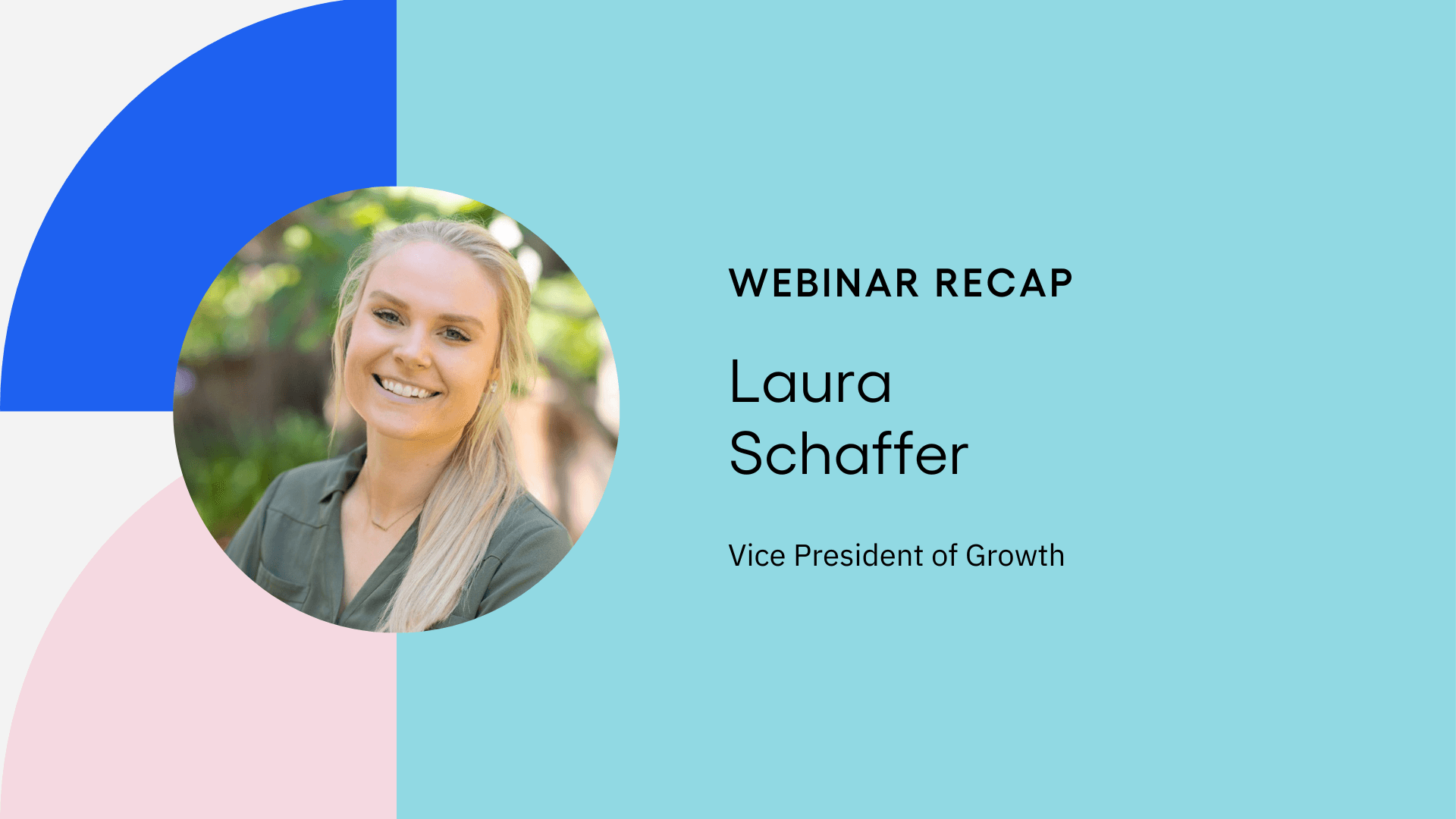
Amplitude VP of Growth Laura Schaffer recently shared best practices for organizations implementing a product-led growth strategy in the webinar Unlocking the Power of Product-Led Growth, hosted by Doug Atkinson, president and host of Solutions Review.
Product-led growth (PLG) is a model that relies on the product, rather than marketing strategies or business development, as the main driver of customer acquisition, monetization, and retention. It focuses on creating a product that brings value to the end-user. In a PLG model, marketing, product, and sales teams work together to drive success and growth.
Watch the full webinar, or read on for Laura’s guidance for setting your organization up for PLG success—and her list of some of the organizations that have achieved it.
Key takeaways
- Successful PLG models break down silos between teams like marketing, sales, and product development, ensuring these groups work in tandem throughout the entire customer journey.
- Establishing and monitoring clear KPIs for each stage of the customer journey is essential, as these metrics guide team performance, foster a data-driven culture, and highlight the impact of team efforts on business goals.
- Expect to fail while experimenting with PLG, but learn from the failures to improve each future iteration.
- To learn more about PLG and gain practical tips on implementing successful PLG strategies, check out our two-volume product-led growth guide: What Is PLG? and How to Get Started With PLG.
Three best practices for teams driving PLG
Laura describes the key to successful PLG models as breaking down barriers between teams. In other models, she points out, teams often work in silos. For example, marketing might work on building brand awareness to acquire customers, and then once a customer signs up, the responsibility for monetization would fall to the sales teams. Meanwhile, sales and customer success teams might handle retention. In a PLG model, these three teams work together in tandem through the entire customer journey.
“In product-led growth, we’re saying, there’s skillset and craft across each of these teams that can offer value and drive [users] through if they’re working together. So we’re taking the best of each team’s skills, and we’re sharing accountability across the space.”
—Lauren Schaffer, VP of Growth, Amplitude
1. Set clear responsibilities across teams and roles
Laura recommends establishing clear roles and responsibilities to ensure that all teams—marketing, sales, customer, and product—work in harmony rather than in isolation.
Begin by identifying key stakeholders from each team who already participate in the PLG process, holding a kickoff meeting to map everyone’s current contributions and discuss how these efforts can be aligned more closely. Use this session to draft a preliminary set of roles and responsibilities.
PLG actions that are taken at each stage of the customer journey: acquisition, retention, and monetization.
Laura suggests using the customer journey to define roles. This involves establishing key product metrics for each phase, using these metrics to provide clarity and focus, and showing teams the impact of their work.
For each phase, Laura says the idea is to use the insights you get from your metrics to continually refine strategies and operations. She advises encouraging teams to experiment with new approaches to improve KPIs, fostering a culture of innovation and responsiveness to data.
Start by defining roles and stage-specific KPIs for your teams.
Acquisition
Marketing and product teams collaborate to enhance product awareness, using the website and interactive demos to capture initial interest. Marketing teams create content for various channels—both paid and organic—while product and engineering teams ensure the infrastructure supports seamless demos and sign-ups.
Sales engages with potential high-value customers early on to provide a tailored experience. Sales and customer success managers (CSMs) engage with ideal customer profiles (ICPs) early to nurture them through the funnel.
Key metrics: traffic, sign-ups, and initial engagement.
Monetization
Product managers focus on developing free trials that demonstrate immediate value, while marketing tailors communications like webinars to guide users toward purchase.
Sales teams work to transition users from a self-service model to a personalized sales experience. Sales teams and CSMs manage the middle and bottom of the funnel, ensuring smooth paths from interest to purchase. Marketing designs targeted email campaigns and prioritizes sales enablement while product teams focus on improving the in-product experience, including trials and add-ons.
Key metrics: percentage of sign-ups that convert to paying customers and the ratio of self-serve to sales-led transitions.
Retention
The product team prioritizes features that enhance user engagement and improve the overall user experience. Marketing drives renewal campaigns and out-of-product engagement, while product and engineering enhance in-product experiences to increase stickiness and perceived value.
Marketing can contribute by creating community-driven experiences that increase user education and engagement. For example, with Amplitude’s Cohort community, users can connect with peers, learn new skills, and level up their analytics practice.
Sales teams and CSMs focus on retaining high-value key accounts through personalized service and effective intervention strategies.
Key metrics: activation, engagement, churn rates, and customer satisfaction scores
2. Celebrate shared wins
There’s no “hero mode” in a PLG model, Laura observes. Because PLG requires marketing, sales, and product teams to work together, success is rarely due to the effort of a single team or individual.
Celebrating shared wins reinforces the collaborative nature of the PLG model, she says It encourages teams to see their efforts as part of a bigger picture, where each function’s success contributes to the overall success of the organization.
How do you embrace a “shared wins” culture? Laura offers the following tips:
- Implement regular meetings or digital shout-outs where all involved teams can come together to celebrate key milestones, big wins, and significant contributions.
- Use company-wide dashboards that display real-time achievements and milestones. These dashboards can track KPIs, project completions, customer feedback scores, and other relevant metrics.
- After a major project or experiment is wrapped up, conduct sessions or distribute surveys where teams can discuss what went well and acknowledge everyone’s contributions.
- Communicate how shared efforts have impacted the business overall. This could involve sharing data on how a particular experiment or initiative has influenced business metrics like revenue growth, customer satisfaction, or market share. Understanding the tangible business outcomes of their collaboration can greatly enhance team members’ sense of accomplishment and motivation.
3. Expect experiments to fail—but learn from them
Even big companies like Microsoft and Amazon fail at their PLG experiments, Laura notes. The reason they are still successful overall? They do a lot of experiments, she says, using each one as a learning experience. She suggests starting by establishing a hypothesis. Once you have a clear idea of what you’re looking for, look at quantitative behavior, and talk to your customer success team to get more qualitative information.
“With the failure rate so high, the only way you can succeed is if you run a lot of experiments, and you leverage the failures to your advantage. Every time you fail, you try to learn which drives a higher success rate in the next run.”
—Lauren Schaffer, VP of Growth, Amplitude
PLG in action
To see what these best practices look like in action, Laura points to some of the still-new field leaders, including Figma, Intuit, and Amplitude.
1. Figma
Figma has designed a user experience (UX) that simplifies the process for existing users to invite new users, and lets invitees access and derive value from the product without downloading anything or signing up. New users can sign up after experiencing the value firsthand. The results were impressive. Laura says, “87% of [Figma’s] first-time users come from these invites,” which significantly contributes to the company’s overall growth and success.
2. Intuit
Intuit found that its QuickBooks customers with Gmail accounts weren’t paying invoices on time. After the Intuit team discovered that Google users preferred using apps, Intuit’s product team developed an app that effectively doubled the rate of on-time invoice payments from this group of users. This strategic move improved the customer experience and significantly bolstered revenue protection and growth.
3. Amplitude
Recognizing that the cost jump from the free plan to the least expensive paid plan was too high, Amplitude used quantitative and qualitative analytics to introduce a self-serve paid plan—the Plus plan—that made the transition smoother for users upgrading from the free version. Since the public launch of the self-serve plan, Amplitude experienced a 15x increase in its free-to-paid conversion rate.
Apply these best practices to improve your PLG strategy
These best practices will kick start your product-led growth strategy or boost your existing one by helping you break down organizational silos and cultivate a more collaborative culture.
Once you have taken these foundational steps, use Amplitude's product-led growth worksheet to set your strategy, ensuring every team member is clear on their role and how they contribute to the overall growth.
Want to learn more about Amplitude? Try a free demo today.

Shab Jahan
Sr. Account Based Marketing Manager, Amplitude
Shab is a seasoned Senior ABM Manager at Amplitude, driving synergies between marketing and sales to create seamless, impactful customer experiences. Her professional journey is enriched by her leadership role at Barracuda Networks, where she developed transformative cloud marketing programs. During her free time, Shab enjoys traveling the world and exploring different cultures.
More from Shab


